

“It just seemed like we couldn’t get a stop tonight.”
Jaylen Brown’s blunt assessment of his team could have gone for either of the Celtics’ last 2 games against the Philadelphia 76ers. After jumping out to a 2-1 series lead, Boston had dropped two consecutive games in brutal fashion—a rare misstep for a team that had dominated its competition throughout the season. After losing game 4 of the series on a last-second 3-point shot by 76ers superstar James Harden, The Celtics returned to TD Garden only to get decimated by a 33-point performance from league MVP Joel Embiid. Now, Boston was down 2-3 and would have to trek down to the hostile confines of Wells Fargo Center to play what they only hoped wouldn’t be their last game of the year.
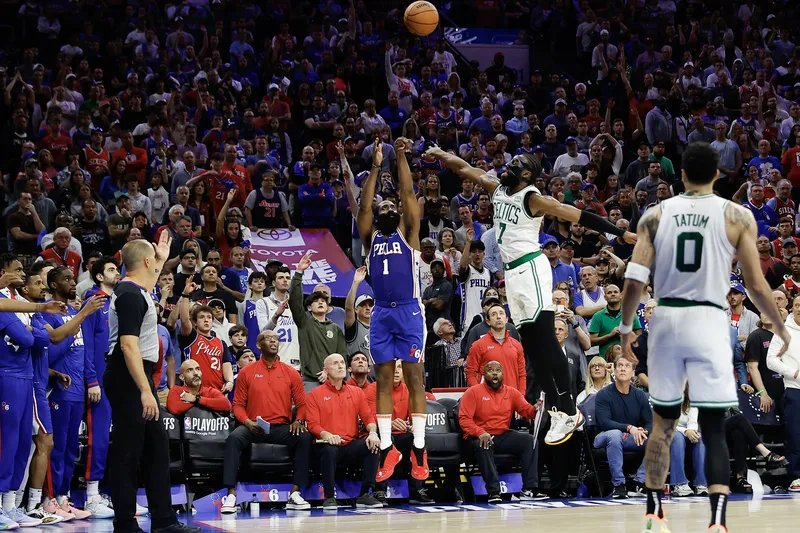
Boston’s back was up against the wall, and their stars were sputtering. After Jayson Tatum started a pivotal game 4 with a putrid 3/11 shot line, the Boston media came down hard on the young stud. “Tatum is supposed to be the straw that stirs the Celtics’ offensive drink,” quipped WEEI’s Andy Hart. “Right now, he’s one of those frustrating environmentally friendly straws that falls apart and doesn’t really do the job. It’s a continuation of concerns kick-started last postseason: Tatum’s inconsistent production within games, within series and coming up short at times in both late-game situations and series when his team needs him the most.” Tatum’s legacy was now on the line, and one thing was for certain: he absolutely had to show up in the next two games.
Part 2: Learning
Prior to Boston’s life-or-death game 6 in Philadelphia, Celtics veteran Marcus Smart was interviewed by CBS regarding his thoughts on Joe Mazzulla’s recently scrutinized coaching choices. While many players might have sugarcoated the situation, Smart was quick to acknowledge the situation. “That just goes to show Joe is learning, just like all of us. I know he’s been killed a lot–rightfully so. You know, he needs to make some adjustments. And he did that. And that’s all you can ask for–just continue to be the best he can be. And it takes everybody, it’s a full team effort.” Smart’s words certainly weren’t pleasant to hear, but there was a glimmer of faith beneath the comment’s blunt exterior.
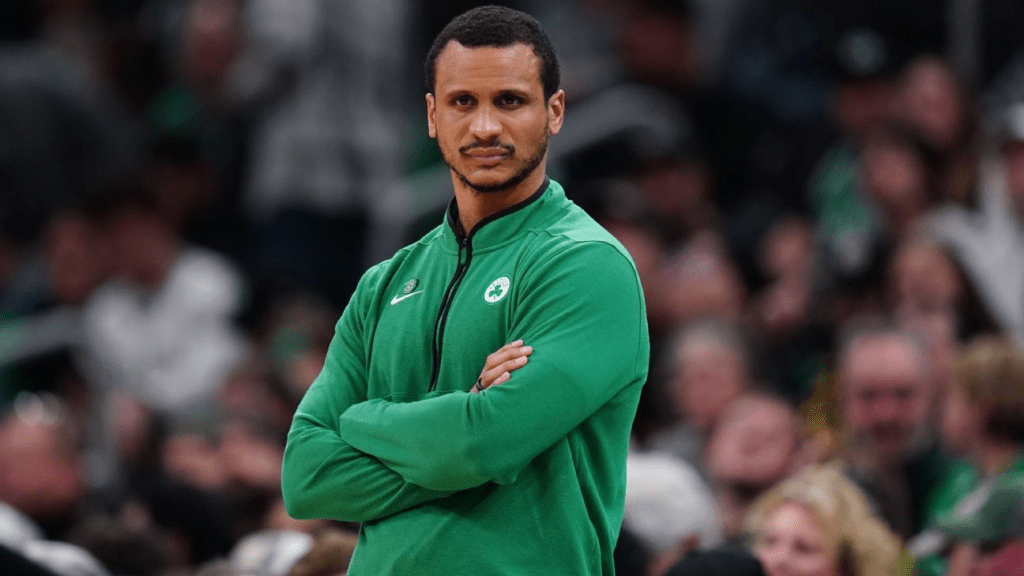
Perhaps Smart’s words for Mazzulla were a sort of payback for Mazzulla’s faith in him earlier in the season. When Boston traded for star Pacers guard Malcolm Brogdon that previous offseason, Mazzulla was questioned about how he would handle Smart’s role, as the one-time Defensive Player of the Year was known to struggle on the offensive end of the floor. Though he had only known Smart for a couple of months, Mazzulla’s belief in Smart was evident from the very beginning.
“I trust Marcus completely, on both ends of the floor,” said Mazzulla, “And I think he’s an important piece for us in every aspect of the offense. He’s done a great job of knowing how he can impact the game, with and without the ball. We’ve asked all of our guys to be able to do that, but I trust him completely…He told me what it (his role) was going to be. Me and Smart have had great conversations…I fully trust him to make the right play,” Mazzulla said.

Despite Mazzulla’s costly misstep, Boston simply acknowledged the situation and trusted Mazzulla himself to make the right play of his own. Mazzulla decided to make a crucial lineup change for game 6, replacing star guard Derrick White with defensive anchor Robert Williams—a move that was suggested by the players themselves. Over the next two games, faith between player and coach would pay off in spades.
Part 3: Whatever it Takes
From the moment game 6 began, it was clear that Mazzulla’s choice to start Williams was the right one. Philadelphia, used to playing a Celtics team running an offense-first lineup, looked stupefied by the presence of Williams and started the game shooting just 1-11. Boston took advantage of Philadelphia’s struggles, getting out to a 7-point lead at halftime despite Tatum struggling once again (he had just three points through three quarters). As the two teams were neck-and-neck entering the 4th quarter, Tatum suddenly caught fire, scorching Philadelphia’s defense for 16 points in 12 minutes en route to a Boston victory.

Despite Tatum’s late showcase of star power taking a majority of the media spotlight, The Celtics credited much of the win to Mazzulla’s choice to start Williams. “It made a tremendous, tremendous difference and you could just see it,” Jaylen Brown said postgame. “It doesn’t take a professional eye to see the difference that Rob made.”
“We’re all about winning, whatever it takes,” Marcus Smart said after the win. “There are things that we don’t see on the court that Joe sees, and there’s also things that we see that Joe doesn’t see. We’re here to help each other.”
Part 4: Dreamwork
The series was now knotted up at 3 wins apiece, and the Celtics would now have to prevail in a do-or-die game 7 in Boston. Despite his superb fourth-quarter performance in game 6, Jayson Tatum once again found himself criticized for his early struggles, but his teammates showed the same faith in him that they showed Mazzulla. “We rely on him,” Malcolm Brogdon said. “He’s our guy. And he’s proven that he’s reliable in those moments. I don’t think there’s any doubt in anybody’s minds. It doesn’t matter how many shots he missed in the first three quarters. He’s going to finish the game for us.”
With a supportive culture blossoming in the Celtics locker room, the Celtics would march into game 7 and deliver a historic performance. Tatum, as though fueled by the support of his teammates, delivered one of the greatest playoff performances of all-time, scoring 51 points and powering the Celtics to a series-winning victory after the team appeared to be crumbling just nights prior. When asked about his mindset heading into game 7, a sense of maturity and team unity flowed through his response.

“Bounce back, right?” said Tatum. “Find a way to win. Game 7 is all about win or go home. I’ve played in my fair share of them. We knew it was going to be tough and competitive, and we stuck together and we figured it out, and we just kept rolling. That was a good one to win.”
Tatum’s series wasn’t perfect—he never tried to say that it was, for him or the Celtics as a whole. Even so, Tatum’s words were those of a man who had come up big and done his job.
The Boston Celtics have been known as a team of superstars throughout their decades of success. However, this series was a reminder of a crucial factor that made the team so successful in the first place. The Celtics didn’t need to play like superstars in order to have faith in each other. It proves something of an old adage in the sports world. Regardless of how much talent a team has, how poorly they’re playing, or how stacked the odds are against them, sometimes a little bit of love and trust is all it takes.


 Otaku Sports